Resilience
Rhode Island Statewide Coastal Resilience Plan
Rhode Island has developed a statewide coastal resilience plan in response to the increasing risks posed by sea-level rise, extreme weather, and other climate change impacts on our communities. This plan will guide our adaptation and response to these growing challenges.
View Resilient Rhody 2025

Repairs to the Charlestown Breachway will improve navigation, stabilize the coastline, and preserve essential water flow.
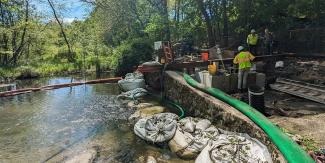
A stormwater treatment train both ensures that clean water flows into the Roger Williams Park ponds and serves as a testing ground for experimental natural water filters, such as jellyfish.

Recent upgrades to Wickford’s Brown Street waterfront parking lot allow for adaptation to changing coastal conditions and help mitigate stormwater runoff and high-tide flooding, expanding the community’s recreational and commercial opportunities.
Resilience is the ability to adapt and thrive in spite of challenges and stress. With over 400 miles of shoreline, coastal resilience is very important to Rhode Island. Rising sea levels and more frequent and intense storms, rain, and snow cause bigger, more widespread floods along the coast and in our rivers. This has led to more expensive emergency response and repairs to public and private property. From September 2023 to January 2024 alone, Rhode Island residents received more than $22 million in FEMA assistance due to flood damage.
“Climate resilience” is defined as the capacity of individuals, institutions, businesses, and natural systems within Rhode Island to survive, adapt, and grow no matter what chronic stresses and weather events they experience.
Then there are rising temperatures in our air and water, and changes in local plant and animal diversity. These factors also have social and economic impacts, like more people being hospitalized during heat waves, and decreased income for fisheries and other marine businesses.
In 2018, Rhode Island launched Resilient Rhody, our first comprehensive plan to make the state more resilient to climate change impacts. The plan included 61 key actions affecting everything from critical infrastructure to community health to ways to fund resilience projects. We document progress on those actions and update the strategy on a regular basis, and you can access that information here, along with other resilience resources and statewide plans.
"Climate resilience” is defined as the capacity of individuals, institutions, businesses, and natural systems within Rhode Island to survive, adapt, and grow no matter what chronic stresses and weather events they experience.
By 2025, every municipality in the state had participated in the Municipal Resilience Program (MRP), completing a workshop that resulted in a summary of the community’s resilience needs and opens up an opportunity to apply for Action Grant funds to help meet those needs. Projects receiving funding so far include green infrastructure, water quality improvements, stormwater management improvements, urban forest resilience, and coastal adaptation and cover every part of the state. Since 2024, the Rhode Island Infrastructure Bank has awarded over $17 million in MRP Action Grants for resilience projects in communities across Rhode Island, funded via the biannual Green Bond.